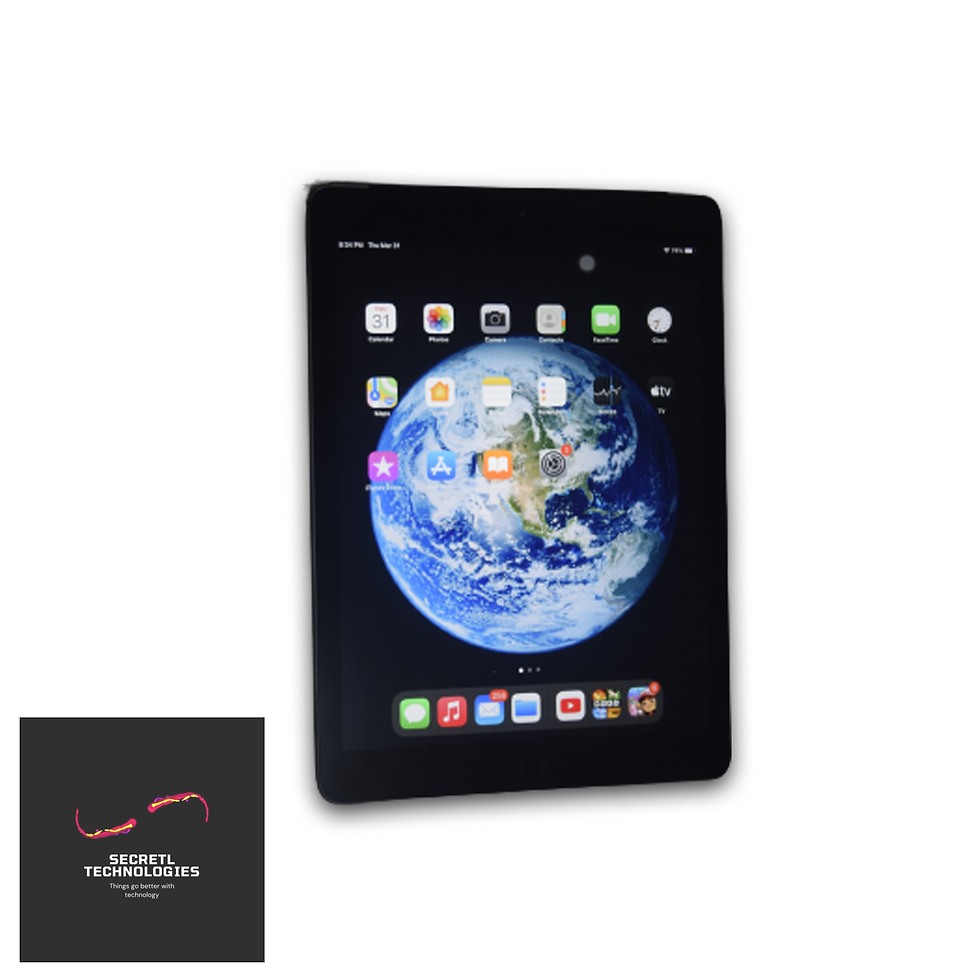
Circulating in the rumor mill for two years, with a probability of near zero for the better part thereof, the iPad Pro was made official in September 2015 and is shipping worldwide as we speak. Guess we already know what's been going on under the surface but the bottom line is Apple lets you decide about the optional pencil and keyboard.
At 12.9 inches of display diagonal, the iPad Pro is Apple's largest tablet and largest handheld device running iOS, considering there are a couple of smaller MacBooks.
The tablet still uses an LCD display, not an OLED. But what's different here is the backlighting technology used to brighten the LCD. Whereas previous iPad Pros had 72 LEDs behind the screen to illuminate the display, the latest model bumps that number to more than 10,000. That's essentially Mini LED tech—thousands of tiny LEDs lighting up the display. The more LEDs you pack in, the better you can control the overall screen contrast and the deepness of blacks in any region of the screen. This is known as local dimming technology, which allows for finer control of the areas of the screen (called zones) that need to stay bright and the areas that need to stay dark. There are 2,596 local dimming zones here. Of course, with that many Mini LEDs, you can also make the whole display much brighter.
The iPad Pro is powered by the same new M1 processor inside the recent MacBook Air, MacBook Pro, Mac Mini, and iMac. So does that mean you get desktop-class computing on the iPad Pro? Correct! Its benchmark scores resembled the MacBook Air's results while beating the 2020 iPad Pro by a wide margin. However, in everyday use, that extra power didn't make much of a difference.
The iPad Pro and its predecessor are both very fast machines. Both handled all my usual tasks with ease, whether it was sketching, writing, editing with several Safari tabs open, or even playing long sessions of Civilization VI. Most people aren't going to tap into that extra power the M1 offers, especially because full-on desktop versions of apps are lacking. Of course, there will be folks that can harness this new power, like if you're the type to edit multiple streams of 4K video or render complex CAD models. If so, you'll be overjoyed at the speed of this thing.
Another desktop-grade feature is the Thunderbolt port. It still offers the same USB-C connectivity as before, but now you can benefit from faster data transfer speeds if you connect it with Thunderbolt-supported external storage drives. You can even hook the iPad up to docks to pair it with external monitors.
But don't get swayed by all the desktop-grade features Apple is waving in your face. This machine still won't feel as reliable as a good ol' laptop. Not because it can't supply enough power—absolutely not. There's just some wonkiness that makes working off of it feel limiting. For example, I connected the iPad Pro to an external monitor and it still only mirrors the iPad's screen. Give me a two-screen solution, Apple!
I also spent several days purely working off the iPad Pro with the Magic Keyboard, and once or twice, I had to switch back to my desktop. It's because the content management system we use here at WIRED acts up sometimes on the iPad and doesn't allow me to tap certain buttons on the screen (it works fine on my PC). That and the fact that the iPad kept logging me out of our CMS. These are the small kinds of woes that ruin the experience overall. You might need to use a specific app or website for your job or for school, and it might be a little too quirky on the tablet.
Another desktop-grade feature is the Thunderbolt port. It still offers the same USB-C connectivity as before, but now you can benefit from faster data transfer speeds if you connect it with Thunderbolt-supported external storage drives. You can even hook the iPad up to docks to pair it with external monitors.
But don't get swayed by all the desktop-grade features Apple is waving in your face. This machine still won't feel as reliable as a good ol' laptop. Not because it can't supply enough power—absolutely not. There's just some wonkiness that makes working off of it feel limiting. For example, I connected the iPad Pro to an external monitor and it still only mirrors the iPad's screen. Give me a two-screen solution, Apple!
I also spent several days purely working off the iPad Pro with the Magic Keyboard, and once or twice, I had to switch back to my desktop. It's because the content management system we use here at WIRED acts up sometimes on the iPad and doesn't allow me to tap certain buttons on the screen (it works fine on my PC). That and the fact that the iPad kept logging me out of our CMS. These are the small kinds of woes that ruin the experience overall. You might need to use a specific app or website for your job or for school, and it might be a little too quirky on the tablet.